A heat pump water heater needs a few specific maintenance steps that a standard tank water heater doesn't: keeping the air filter clean, checking the anode rod, and clearing the condensate drain. Skip these and the unit's efficiency drops fast, or it can quietly fall back into expensive electric-resistance-only backup mode.
Clean or Replace the Air Filter
A heat pump water heater pulls heat from the surrounding air, so it depends on steady airflow across an evaporator coil. Check the intake air filter every 1 to 3 months and rinse or replace it when it looks dusty. A clogged filter restricts airflow, forces the compressor to work harder, and is one of the most common reasons a unit underperforms.
Check and Clear the Condensate Drain
As the heat pump extracts warmth from the air, it produces condensation that needs somewhere to go. Inspect the condensate drain line and pan periodically for algae buildup or blockages. A clogged drain can cause water to back up around the unit or trigger a safety shutoff.
Inspect the Anode Rod
Like any tank-style water heater, a heat pump water heater has a sacrificial anode rod that protects the tank from corrosion. Have a technician check it annually — San Diego's water conditions can accelerate wear — and replace it once it's significantly corroded, typically every few years, to protect the tank's lifespan.
Troubleshooting Common Heat Pump Water Heater Problems
- Unit Runs in Electric-Only Mode – Many models automatically switch to backup electric heating elements when the heat pump component can't keep up, which spikes energy bills. This usually points to airflow restriction, a low ambient temperature around the unit, or a heat pump component needing service.
- Not Enough Hot Water – Often tied to a dirty air filter, a thermostat set too low, or sediment buildup in the tank reducing usable capacity.
- Unit Won't Turn On – Check the breaker and any reset or high-limit switch first; if it still won't start, the compressor or control board may need diagnosis.
- Water Around the Base – Could be a clogged condensate line, a loose fitting, or in some cases a tank leak that needs prompt attention.
- Unusual Noise or Vibration – Often a sign the unit needs cleaning or that a fan or compressor component is wearing out.
When to Call a Professional
Filter cleaning and a visual drain check are reasonable DIY tasks. Anode rod replacement, refrigerant-side issues, and any electrical diagnosis should go to a licensed technician. If your unit needs
heat pump repair and installation service, our team works on heat pump water heaters as well as whole-home heat pump systems.
FAQs
Q1. How often should I maintain a heat pump water heater?
Clean or check the air filter every 1 to 3 months, inspect the condensate drain a few times a year, and have the anode rod, tank, and refrigerant components professionally inspected annually.
Q2. Why is my heat pump water heater not heating?
Common causes include a clogged air filter restricting airflow, a tripped high-limit switch, a failed compressor, or the unit stuck in electric-only backup mode. A technician can diagnose the exact cause.
Q3. Can I clean the air filter myself?
Yes — rinsing or vacuuming the intake filter every 1 to 3 months is a simple task most homeowners can handle without a technician.


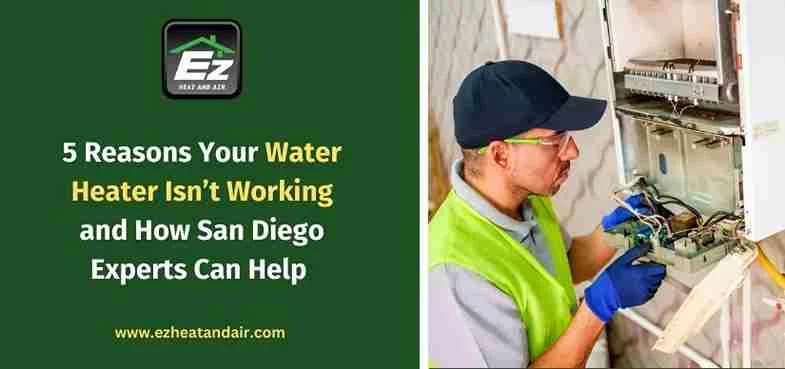 5 Reasons Your Water Heater Isn’t Working and How San Diego Experts Can Help